
What Was in Lincoln’s Wallet
—and Why It Matters for Leaders Today
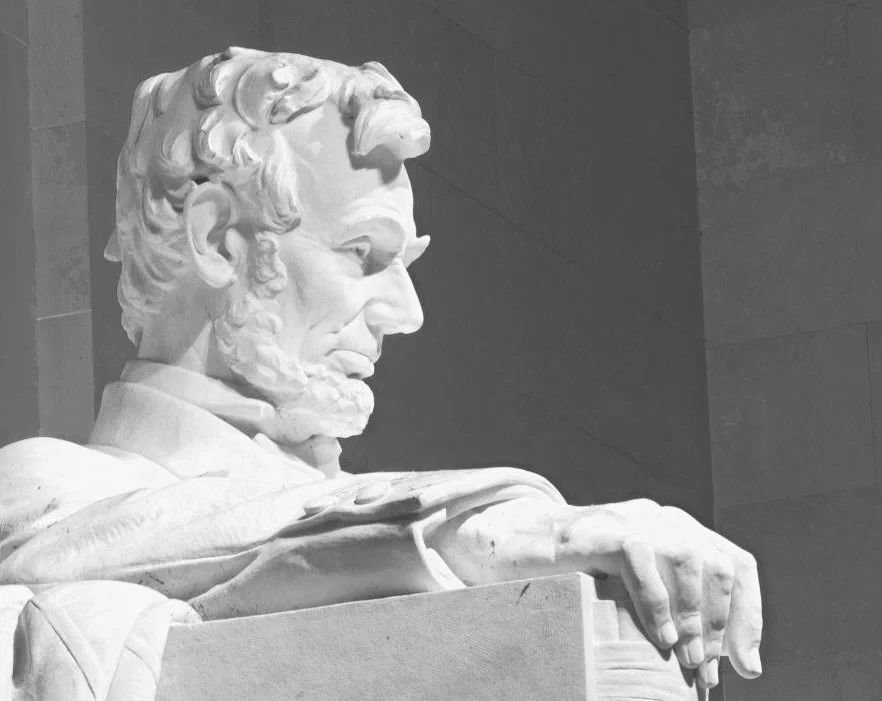
When Abraham Lincoln died, the contents of his wallet were cataloged.
Among the items—there was something surprising: newspaper clippings.
Not policy wins. Not speeches. But articles praising him.
One of the most revered leaders in history carried reminders that he was doing a good job.
If Lincoln needed reassurance—quiet confirmation that his leadership was making a difference—what does that say about the rest of us?
Leadership Is About Empowerment.
In a recent conversation with Vince Burens, we talked about leadership through the lens of sport—specifically soccer and hockey. Unlike American football, where coaches call a play every few seconds, these sports demand something different.
Once the game starts, the coach can’t joystick the players.
Direction happens before the match. During the game, great coaches can trust their players to think, adapt, and move together.
That’s a powerful metaphor for modern leadership.
But many leaders still operate like coordinators, calling plays from the sidelines—constant correction and oversight. But that approach collapses in fast-moving, complex environments.
The best leaders don’t train people in exactly what to do.
They train them in how to think.
Fundamentals Always Outplay A Brilliant Strategy
One of the most common leadership frustrations we hear is this:
“We have a great strategy, but our people aren’t executing.”
The uncomfortable truth is that strategy often fails not because it’s wrong—but because the organization lacks the capacity to execute it.
Execution depends on mastery of the fundamentals:
Clear communication
Shared vision
Trust
Decision-making competence
Autonomy and Intrinsic Motivation
Without those, even the most elaborate strategy is just a dream.
In soccer, championships are won by teams that can pass, receive, and move harmoniously under pressure.
Businesses thrive when they operate with clear expectations, owned accountability, trusted feedback, healthy communication and conflict resolution.
Great leaders obsess less over complexity, and more over executing the basics exceptionally well.
The Accountability Myth
We also frequently hear leaders say we need to “hold people accountable.”
But accountability without personal ownership is just fear inducing criticism.
If expectations are vague, unspoken, or assumed, accountability becomes punitive rather than productive. In most cases, what looks like an accountability problem is actually a clarity problem.
Strong leaders make the expectations for success unmistakably clear:
What does winning look like?
What results does this role own?
How does this work connect to the larger mission?
When individuals are given this type of clarity, they're able to be accountable because of shared ownership—not enforcement.
Why Lincoln’s Wallet Still Speaks
The man carried proof that his leadership mattered. That he was making a difference.
His need for a tangible validation or reminder of his impact was not a sign of weakness.
Leaders often feel the need to outwardly project certainty while carrying doubt alone. But over time, that isolation erodes judgment, empathy, and joy.
Healthy leadership makes room for encouragement—for reflection—for remembering why the work matters.
If one of history’s greatest leaders needed reminders that he was enough, maybe the goal isn’t to eliminate that need—but to lead in ways that acknowledge it.
The Real Question for Leaders
The question isn’t whether you’re good enough to lead.
The question is:
Are you showing up authentically, or trying to lead like someone else?
Are you brave enough to invite feedback, so you can see what others see?
Are you training people to think—or just telling them what to do?
Are you creating clarity—or relying on authority?
And are you allowing yourself to be human while you lead?
Because the leaders who last aren’t the ones who control.
They’re the ones who prepare well, trust deeply, and remember—sometimes quietly—that leadership is still a very human endeavor.
Let’s Talk.
If you’re ready to empower others and lead with clarity, we can help.
Schedule a conversation →
#AuthenticLeadership #LeadershipDevelopment #TalentDevelopment #ViveroLeadership #OwnYourGreatness #NoMoreCarbonCopies