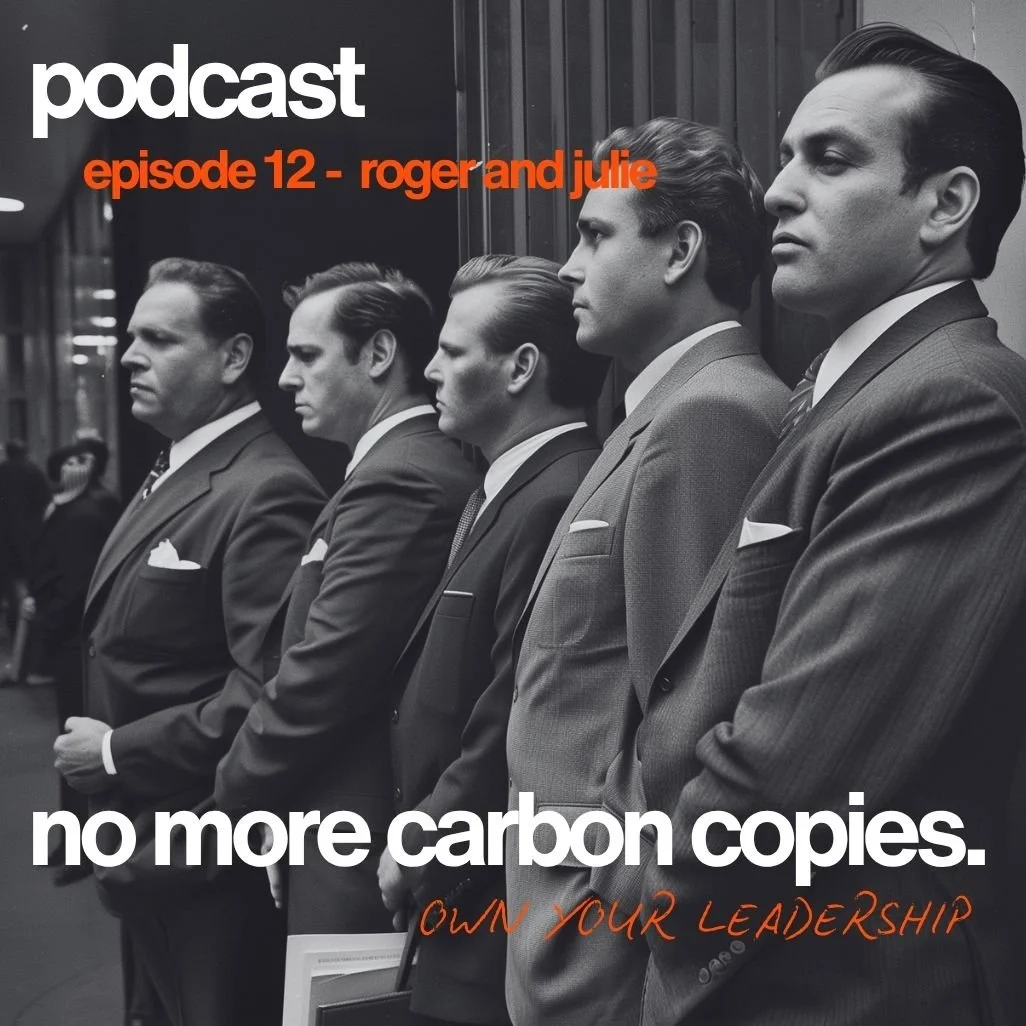
Podcast Episode #12 - with Roger Johnson
Roger Johnson
Founder - Vivero Leadership
Podcast Transcript: The Leadership Accelerator Impact
Host: Roger Johnson, Founder of Vivero Leadership
Special Guest Host: Julie Johnson, Head of Marketing at Vivero Leadership
Transcript
Title: Unlocking Leadership Confidence with Roger Johnson
Introduction
Welcome to No More Carbon Copies, the podcast for high-performing leaders with big goals who feel stuck trying to reach the next level. At Vivero Leadership, we believe no two leaders are the same. The best leaders perform at their highest when they understand what makes them unique and stop trying to lead like someone else. This is where we explore how to see ourselves clearly, address self-sabotage, and lead with clarity, confidence, and purpose. You don't need to be a copy. You just need to be you.
Julie: Welcome to a very special episode of the No More Carbon Copies podcast. Usually, you hear Roger in the host chair sharing his insights on how to help leaders flourish. But today, we're flipping the script. I’m Julie Johnson, Head of Marketing here at Vivero Leadership, and as many of you know, I also happen to be Roger’s wife.
I’ve had a front-row seat to the story we’re about to share. In 2024, we launched Vivero Leadership, but not everyone knows how we got here. Before you were guiding other leaders on their own paths, you were stuck in a season of life where you felt overwhelmed and uncertain. When you think back to that time, what was life like for you?
Part 1: The Golden Handcuffs and the Physical Toll
Roger: I was employed to do really important things for a company I truly enjoyed working for. I kept acquiring responsibility—managing people, projects, and customers, bringing in revenue, and even creating a new product development organization. Things were moving. But I found myself stuck doing things that other people needed me to do—things that were important but sucked the joy right out of me.
I was making more money than I ever thought I would make in my life, which is what really kept me there. I took on responsibilities completely outside of my expertise, like leading two technical organizations when I knew nothing about technology. The things I enjoyed the most were actually the things I did "off the side of my desk," like developing and executive coaching an MBA leadership program.
Julie: That season didn’t come overnight. It wasn't like you took a new job and it was a bad fit. There were many years leading up to that point of doing what was expected and, as you've said, running a race that other people set for you. You would do whatever was asked of you, which is an honorable trait, but what did that do to you?
Roger: It was a slow migration into things that were good for the organization, but didn't fill me up. The sweet spot is the intersection of what you’re really good at, the value you create, and the joy that gets you up in the morning. I stayed in that role for so long to avoid change and because of the good steady income and benefits.
Gradually, my body started paying the price. I stopped sleeping well, and my migraines got progressively worse. Then, I started getting this bizarre sensation under my skin—like an electric chill. I reached a point where I had no energy, and I genuinely started to think I was dying.
Julie: What did you do at that point?
Roger: Driving to work one morning, I just reached a wall where I realized I didn't want to go any further. I called my brother, who is a doctor I trust. I had pretended for a long time that I was fine, and I hadn't even told you how bad it was. After all kinds of blood tests and body scans, we found out there was nothing physically wrong with me. It was entirely the chemical result of prolonged, severe stress. My body was literally shutting down, telling me I couldn't run at that pace anymore.
Part 2: Taking the Ultimate Leap
Julie: So you couldn't continue doing that job, despite the financial freedom it provided. Back in 2024, we launched our business, but it wasn't the ideal time for our family. We had one child graduating high school and three more right behind them going to college every two years. It was a massive risk. What was the scariest part?
Roger: Going from the security of a W2 employee to a business owner with no guaranteed revenue or insurance was super scary. I was highly confident in my actual core competence of coaching, but I was terrified of everything else that goes into running a business. How do you sell yourself when you've never done it before? Pricing, sales—I had no experience there, which made me feel very insecure.
Part 3: The Birth of the Real Leadership ID (RLID)
Julie: The reason it wasn't completely paralyzing was because you were very clear on who Roger Johnson is and how you can be a gift to the people around you. That personal discovery process is what birthed our framework at Vivero Leadership. Can you talk about the origin of that process?
Roger: It started back when I was leading that MBA leadership rotation program. It was a high-visibility, high-challenge, and high-development program where we placed top MBA graduates on strategic corporate projects. At the end of every project, we would gather in a room and review their work. We always started with: What did they do well. Where did they kill it. We focused on the soft skills of leadership—influence, communication, and conflict negotiation. The feedback made them incredibly confident and clear about who they were.
I loved that program so much that it made me wonder what made me uniquely effective. So, I went back and interviewed people from all different seasons of my life—from my 20s, 30s, and 40s. I talked to people from my time as a soccer coach, in non-profit leadership, and in healthcare technology.
With the help of my friend Spencer Sessions, we digested the data. The amazing thing was that no matter the context, everyone described me the exact same way. They said I always invested in them, helped them understand their gifts, and helped them believe in themselves more so they could resolve complex challenges.
Julie: You also found out how you do it. I did some interviews on your behalf as we built the brand, and the common thread was that you bring equal parts intense challenge and intense encouragement. You are your clients' biggest fan until they can believe in themselves.
Roger: Exactly. It’s like an athletic coach; you have to encourage them, but you also have to be willing to speak the hard truths they might be blind to. That project helped me see who I was, and it's the exact foundation we used to create the Real Leadership ID (RLID).
Part 4: How the RLID Framework Works
Julie: For our listeners, explain what the RLID process actually looks like.
Roger: The process is simple but profound. We ask the client to identify people who care about them and who have watched them do real work and face real challenges. Because there is established trust, the client knows the feedback is for their benefit. I conduct the interviews using six standard questions, and then I catalog the responses.
We aren't looking for weaknesses. We are looking for themes of leadership practice—what they do exceptionally well, and the situations where those strengths might be diminished or unconsciously leveraged to cause self-sabotage.
Julie: Can you give an example of what self-sabotage looks like in a high-performing leader?
Roger: I had a client who was highly collaborative. He would bring the right people into a room, make a decision, and hand it off to be executed. But after the meeting, he would continue having sidebar conversations with people who weren't in the original meeting, change his mind, and inadvertently trump the original decision. It created massive friction, and his team felt undervalued. He had great intentions, but he was entirely blind to the impact of his behavior.
Once we highlight these competencies and blind spots, we build an action plan around what I call the Three D's:
Double Down: Identify your core competencies—the areas that drive the most revenue and highest impact—and focus your energy there.
Delegate: Strategically pass off responsibilities that you can do, but that someone else in the organization could do better, freeing up your time to double down.
Develop: Identify the essential skills you must have for your role (e.g., public speaking for an introverted executive) and create a targeted training plan to master them.
We call this Return on Leadership. When you get better at leading, that investment has a direct, measurable benefit to the organization.
Conclusion: Leading True
Julie: Coming full circle to your story, you went from an unfulfilling role to where you are today. What is the difference?
Roger: It is night and day. Even when I have to do the difficult parts of running a business, it works because it enables me to spend the vast majority of my time doing what I love. I went from being super stressed and dissatisfied to a situation where I love what I do so much that I never want to retire.
Julie: As your wife and business partner, I can see that you show up differently in life, not just at work. You’re a better dad, a better husband, and a better friend because you are entirely comfortable in your own skin.
Roger: When you understand who you are, it connects your entire life and makes you free. At the end of the day, you are a better leader than you think you are—you just don't know it, and you get in your own way more than you realize. Our job is to help you dial down the critical, false voices in your head, dial up the true ones, and lead with ultimate confidence.
Julie: Thank you everyone for listening. If you're interested in learning more about the Real Leadership ID or want to schedule a conversation with Roger, visit our website at viveroleadership.com. There is no obligation, just start the conversation. We also offer manager training and in-house Real Leadership IDs for teams.
Resources & Links:
Book a complimentary strategy call with Roger
Connect with Roger on LinkedIn